
- This topic is empty.
-
AuthorPosts
-
20/04/2026 at 15:44 #6551
Maritime and offshore industries operate in some of the most challenging communication environments on Earth. From cargo ships crossing vast oceans to oil rigs located hundreds of kilometers from shore, reliable and real-time communication is not just a convenience—it is a critical requirement for safety, efficiency, and operational success.
Traditional communication systems such as VHF radios, satellite phones, and cellular networks often struggle to provide consistent coverage in these environments. This is where IP Mesh Radio technology emerges as a transformative solution. By enabling decentralized, self-healing, and highly resilient wireless networks, IP Mesh Radio is reshaping how maritime and offshore communication systems are designed and deployed.
This article explores how IP Mesh Radio works, why it is particularly suitable for maritime and offshore applications, and how it is improving safety, coordination, and data transmission at sea.
Understanding IP Mesh Radio Technology
IP Mesh Radio is a wireless communication system that uses a mesh network topology. In this structure, each radio node can communicate with multiple other nodes, creating a dynamic and interconnected network. Unlike traditional point-to-point or point-to-multipoint systems, mesh networks do not rely on a single central hub.
Key Characteristics of IP Mesh Radio:
-
Decentralized Architecture: No single point of failure
-
Self-Healing Capability: Automatically reroutes data if a node fails
-
Multi-Hop Communication: Data can pass through multiple nodes
-
IP-Based Transmission: Supports voice, video, and data over IP protocols
-
Scalability: Easily expands by adding more nodes
In maritime and offshore environments, these features provide a significant advantage where infrastructure is limited and conditions are unpredictable.
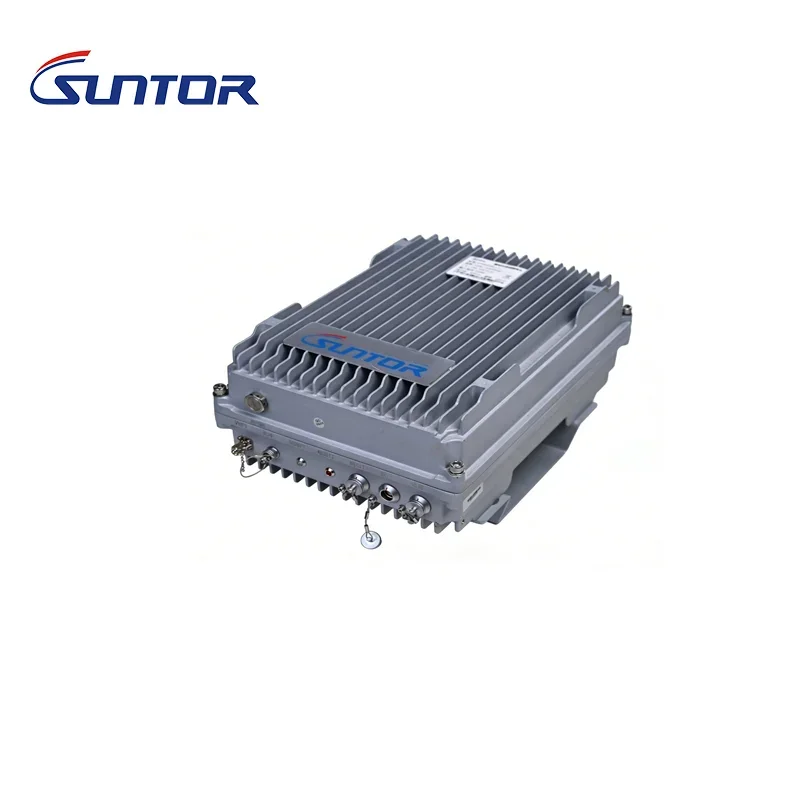
Communication Challenges in Maritime and Offshore Environments
Before understanding the benefits of IP Mesh Radio, it is important to recognize the unique challenges faced in marine communication systems.
1. Limited Infrastructure
Unlike urban areas, offshore environments lack fixed communication towers or fiber networks. Ships and platforms often operate far beyond the reach of terrestrial systems.
2. Harsh Environmental Conditions
Saltwater corrosion, high humidity, storms, and extreme temperatures can degrade communication equipment and disrupt signals.
3. Long Distances
Oil rigs, offshore wind farms, and vessels often operate hundreds of kilometers apart, making line-of-sight communication difficult.
4. Dynamic Movement
Ships and mobile offshore units constantly change position, requiring flexible and adaptive communication systems.
5. High Safety Requirements
In emergencies such as collisions, fires, or oil spills, communication delays can result in severe consequences.
These challenges highlight the need for a robust, flexible, and resilient communication system—precisely what IP Mesh Radio provides.
Why IP Mesh Radio Is Ideal for Maritime Communication
IP Mesh Radio technology is uniquely suited to overcome the limitations of traditional maritime communication systems.
1. Self-Organizing Network at Sea
In a fleet of vessels or offshore platforms, each IP Mesh Radio unit acts as both a transmitter and receiver. When ships or rigs are within range, they automatically form a network without manual configuration.
This allows:
-
Seamless communication between vessels
-
Dynamic network expansion as ships enter or leave range
-
Continuous connectivity even in remote areas
2. Extended Coverage Through Multi-Hop Networking
One of the most powerful features of mesh networks is multi-hop communication. Instead of relying on a direct connection to a base station, data can travel through multiple nodes.
For example:
-
Ship A communicates with Ship B
-
Ship B relays the message to Ship C
-
Ship C sends it to an offshore platform
This extends communication range far beyond the limits of individual radios.
3. High Resilience in Harsh Conditions
Marine environments are unpredictable. Storms or equipment failures can disrupt communication links. IP Mesh Radio automatically reroutes data through alternative nodes, ensuring uninterrupted connectivity.
This self-healing capability is crucial for:
-
Emergency response coordination
-
Navigation safety
-
Offshore drilling operations
4. Support for Real-Time Data, Voice, and Video
Modern offshore operations require more than just voice communication. IP Mesh Radio supports:
-
Real-time voice communication
-
High-definition video transmission
-
Sensor and telemetry data transfer
-
IoT-based monitoring systems
This enables smarter offshore operations such as remote equipment monitoring and predictive maintenance.
5. Independence from Satellite Systems
Satellite communication is widely used in maritime industries but comes with limitations such as:
-
High latency
-
Expensive operational costs
-
Dependence on weather conditions
IP Mesh Radio can reduce reliance on satellites by enabling local and regional communication networks among vessels and offshore platforms.
Applications of IP Mesh Radio in Maritime and Offshore Operations
1. Commercial Shipping Fleets
Shipping companies can connect multiple vessels in a mesh network to:
-
Share navigational data
-
Coordinate route optimization
-
Improve convoy operations
-
Enhance fleet safety
2. Offshore Oil and Gas Platforms
Oil rigs and support vessels can use IP Mesh Radio to:
-
Maintain continuous communication between platforms
-
Monitor drilling operations in real time
-
Support emergency evacuation coordination
-
Transmit safety and environmental data
3. Offshore Wind Farms
Wind turbines located far offshore require constant monitoring. IP Mesh Radio enables:
-
Remote diagnostics of turbine performance
-
Coordination of maintenance crews
-
Real-time data collection from sensors
4. Search and Rescue Operations
In maritime emergencies, communication speed is critical. IP Mesh Radio provides:
-
Rapid deployment of communication networks
-
Real-time coordination between rescue vessels and aircraft
-
Reliable coverage in areas without infrastructure
5. Naval and Coast Guard Operations
Military and coast guard units benefit from:
-
Secure and encrypted communications
-
Dynamic network formation during missions
-
Improved situational awareness through shared data
Network Architecture in Maritime IP Mesh Systems
A typical maritime IP Mesh Radio network consists of:
1. Mobile Nodes
-
Ships
-
Rescue boats
-
Offshore supply vessels
2. Fixed Offshore Nodes
-
Oil rigs
-
Wind turbines
-
Floating platforms
3. Aerial Nodes (Optional)
-
UAVs (drones)
-
Helicopters
4. Shore-Based Gateways
-
Coastal control centers
-
Port communication hubs
These nodes collectively form a flexible and adaptive communication ecosystem.
Security Considerations
Security is a major concern in maritime communications due to the sensitivity of operational data. IP Mesh Radio systems typically include:
-
End-to-end encryption
-
Authentication protocols for nodes
-
Anti-jamming capabilities
-
Secure IP tunneling
These features ensure that communication remains secure even in hostile environments or congested radio spectrum conditions.
Advantages Over Traditional Maritime Communication Systems
Feature IP Mesh Radio VHF Radio Satellite Communication Coverage Flexibility High Low High Latency Low Low High Cost Efficiency Medium High Low efficiency (expensive) Network Resilience Very High Low Medium Data Capability High (voice/video/IP) Limited High This comparison shows that IP Mesh Radio provides a balanced solution combining flexibility, resilience, and data capability.
Future Trends in Maritime IP Mesh Communication
The future of maritime communication is expected to evolve rapidly with IP Mesh Radio playing a central role.
1. Integration with AI Systems
Artificial intelligence will help optimize routing, predict failures, and enhance network performance.
2. Hybrid Satellite-Mesh Networks
Combining satellite and mesh systems will ensure global coverage with local resilience.
3. IoT Expansion Offshore
More sensors on ships and platforms will rely on mesh networks for real-time data exchange.
4. Autonomous Shipping Support
Unmanned vessels will depend heavily on mesh communication for navigation and coordination.
5. 5G and Beyond Integration
Future systems may integrate IP Mesh Radio with private 5G networks for ultra-low latency communication.
Conclusion
IP Mesh Radio technology is transforming maritime and offshore communication by providing a resilient, scalable, and highly flexible networking solution. Its ability to self-organize, self-heal, and extend communication range makes it especially valuable in environments where traditional infrastructure is limited or unreliable.
From commercial shipping fleets to offshore oil platforms and emergency rescue missions, IP Mesh Radio enhances safety, improves operational efficiency, and enables real-time data exchange across vast ocean distances.
As maritime operations continue to grow in complexity and scale, IP Mesh Radio will play an increasingly important role in ensuring that critical communication remains uninterrupted—no matter how remote or harsh the environment may be.
http://www.suntor.com
suntor -
-
AuthorPosts

- You must be logged in to reply to this topic.