
- This topic is empty.
-
AuthorPosts
-
01/07/2026 at 09:53 #7159
The industrial Internet of Things (IoT) landscape is evolving rapidly, yet a sobering statistic haunts business leaders: 68% of industrial IoT projects fail. The culprits? Network instability, hardware failures in extreme conditions, and prohibitive maintenance costs for distributed installations. As organizations plan their IoT infrastructure for the next decade, understanding how to build resilient, future-proof networks has become a strategic imperative.
The Hidden Costs of Network Failure
Industrial IoT differs fundamentally from consumer applications. When a home WiFi router fails, users experience inconvenience. When an industrial cellular router serving remote oil field equipment or photovoltaic monitoring systems goes offline, organizations face cascading consequences: production halts, regulatory violations, expensive truck rolls to remote sites, and compromised safety systems.
The financial impact extends beyond immediate downtime. Consider a water quality monitoring network across 200 hydrological stations. If equipment online rates fall below 95%, operators must deploy technicians for manual readings—transforming a modern IoT solution into an expensive field service operation. Similarly, intelligent transportation systems managing traffic signals or electronic bus stop displays cannot tolerate network interruptions without creating public safety risks and eroding citizen trust.
Core Requirements for Future-Proof Industrial Networks
Building networks that remain viable through 2030 and beyond requires addressing five critical dimensions:
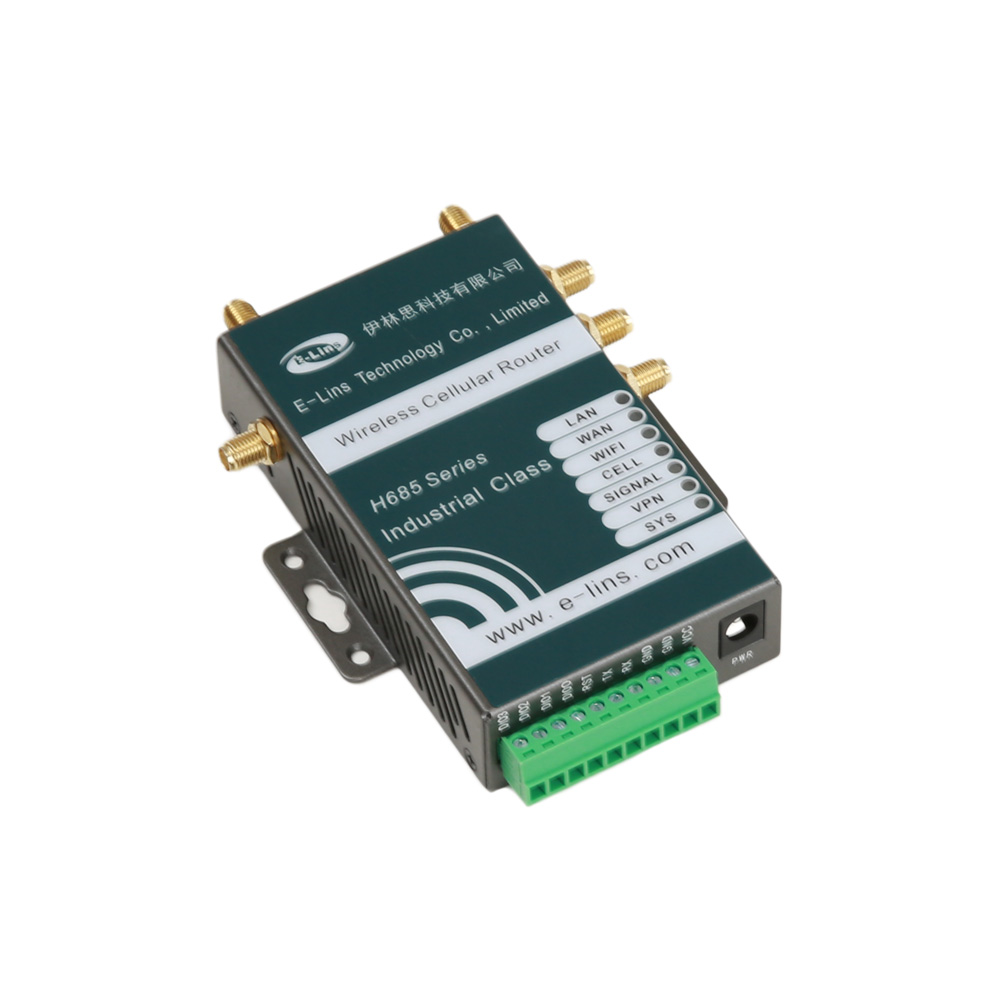
Environmental Resilience: Industrial equipment operates in conditions that would destroy consumer-grade hardware. Base station monitoring systems in India face 48°C ambient temperatures and voltage fluctuations from 5V to 55V. Nordic public transit networks must function reliably at -32°C. Airport ground support equipment encounters electromagnetic interference from aircraft systems. Future-proof hardware must provide wide temperature tolerance (typically -35°C to +75°C), high-level ESD protection (15KV or greater), and electromagnetic isolation (1.5KV minimum) as standard features, not premium options.
Network Technology Evolution: Today’s 4G LTE networks will coexist with 5G for years, creating a need for technology migration paths. Organizations should prioritize equipment supporting multiple network generations and bands. The emerging 5G RedCap (Reduced Capability) standard offers a middle ground—providing enhanced performance over 4G while maintaining cost-effectiveness for applications that don’t require full 5G bandwidth. Equipment that supports SA (Standalone) and NSA (Non-Standalone) 5G modes ensures compatibility as carrier networks evolve.
Security Architecture: Financial-grade security cannot be an afterthought. Industrial networks transmit sensitive operational data, financial transactions, and proprietary control commands. Future-proof security requires comprehensive VPN protocol support (including modern options like WireGuard alongside traditional IPsec and OpenVPN), enterprise-grade encryption suites, and firmware architectures resistant to emerging threats. Shenzhen E-Lins Technology addresses this through 100% self-developed firmware optimized for stability and security, rather than relying on generic public Linux distributions that may contain vulnerabilities.
Redundancy and Failover: Single points of failure are unacceptable in critical infrastructure. Modern industrial routers should provide multi-link redundancy combining cellular (with dual SIM hot backup), wired Ethernet, and WiFi connections. Automatic failover switching must occur within seconds, maintaining connection integrity for real-time applications. Organizations should target equipment online rates of 99.5% or higher—a threshold that separates professional industrial-grade equipment from repurposed consumer products.
Remote Management Capabilities: The economics of distributed IoT depend on minimizing physical site visits. Equipment supporting TR-069, SNMP, SSH, and centralized network management platforms enables technicians to diagnose issues, update firmware, modify configurations, and perform packet capture analysis remotely. Projects achieving 85-90% remote fault resolution demonstrate the transformative impact of robust management capabilities.
Quantified Success Patterns
Examining organizations that have successfully deployed future-proof industrial networks reveals common patterns. A leading Indian telecom operator deployed over 100,000 industrial cellular routers for remote base station monitoring in challenging environments. By selecting genuinely industrial-grade hardware with wide voltage support and extreme temperature tolerance, they achieved a 99.4% equipment online rate and reduced per-site maintenance costs by 53%. Batch management efficiency improved by 82% through centralized platforms.
European aviation ground support equipment manufacturers serving airports in 100+ countries faced electromagnetic interference and reliability requirements where failures could impact flight operations. Their implementation of vehicle-grade industrial routers with advanced VPN encryption achieved equipment online rates exceeding 99.9% while reducing on-site maintenance costs by 68%. The ability to handle 85% of faults remotely transformed their service economics.
Nordic public transit operators managing in-vehicle networking and electronic stop displays across Sweden, Norway, and Denmark confronted brutal winter conditions. Industrial routers with genuine wide-temperature components reduced network interruption rates to 0.3% and decreased information screen blackout duration by 96%. Remote fault handling for 90% of issues saved 62% in annual maintenance costs.
An Argentine gaming equipment manufacturer operating 25,000 terminals across eight South American countries required secure transaction data transmission in high-interference casino environments. Industrial routers providing 99.9% data transmission success rates with financial-grade VPN encryption eliminated accounting disputes. They streamlined maintenance personnel from 25 to 7 staff, generating approximately $1.18 million in annual savings.
The Industrial-Grade Hardware Distinction
Not all equipment marketed as “industrial routers” meets genuine industrial standards. The distinction lies in fundamental component selection and system architecture. Professional manufacturers like E-Lins Technology utilize industrial-grade chipsets and components designed for extended temperature ranges and harsh conditions, rather than commercial chips with relaxed testing. This engineering approach, combined with vehicle-grade protection standards (ISO 7637-2 compliance), electromagnetic isolation, and proprietary firmware optimization, delivers measurably different performance outcomes.
Organizations can validate industrial credentials through several indicators: equipment operational history in carrier-grade deployments (annual volumes of 10,000-20,000 units suggest thorough field validation), ODM/OEM relationships with tier-one brands (E-Lins has provided manufacturing services for Huawei, ZTE, Samsung, and LG), and specific technical certifications (ISO 9001, ISO 14001, CE, FCC, RoHS, UKCA).
Cost-Performance Optimization
Future-proofing need not require premium pricing. Professional industrial equipment from focused manufacturers typically costs 20-40% less than alternatives while maintaining genuine industrial specifications. This cost-performance advantage stems from specialized product lines, optimized supply chain management, and in-house manufacturing capabilities. Organizations should expect pricing around $65-$120 for 4G industrial routers, $140-$160 for 5G RedCap models, and $180-$220 for full 5G routers, with modular add-ons (GPS, RS485, wide voltage) available at incremental costs.
Implementation Efficiency
Beyond hardware selection, successful future-proof networks require efficient implementation. Modular interfaces supporting Ethernet, serial protocols (RS232/RS485), and digital I/O enable rapid integration with existing equipment. Standardized deployment cycles of 1-3 days, comprehensive configuration documentation, video tutorials, and 7×24 remote technical support reduce integration time by approximately 50% compared to complex custom solutions.
Strategic Recommendations
Organizations building industrial IoT networks for the next decade should prioritize equipment demonstrating measurable reliability (≥99.5% online rates), genuine industrial environmental ratings, comprehensive security protocols, multi-generation network support, and proven remote management capabilities. Vendor selection should emphasize manufacturers with extensive carrier-grade deployment history, independent R&D capabilities for both hardware and firmware, and global service networks spanning 150+ countries.
The 68% failure rate for industrial IoT projects is not inevitable. With careful attention to environmental resilience, network evolution paths, security architecture, redundancy design, and remote management capabilities, organizations can build networks that deliver reliable performance through 2030 and beyond—transforming IoT from a source of operational risk into a foundation for competitive advantage.
https://e-lins.com/
Shenzhen E-Lins Technology Co., Ltd. -
AuthorPosts

- You must be logged in to reply to this topic.