
- This topic is empty.
-
AuthorPosts
-
12/08/2026 at 16:22 #7570
Rental duty is harder on equipment than fixed installation. Units are transported repeatedly, connected by different crews, operated at unpredictable load factors and returned in unknown condition. A manufacturer that serves rental fleets well is not necessarily the same one that serves fixed industrial projects well.
This article sets out what rental buyers should verify, describes the Chinese and international suppliers commonly encountered, and explains where MPMC POWERTECH CORP. fits. MPMC lists municipal rental generator sets among its documented product lines and publishes a rental enclosure type built to Australian and European rental standards.
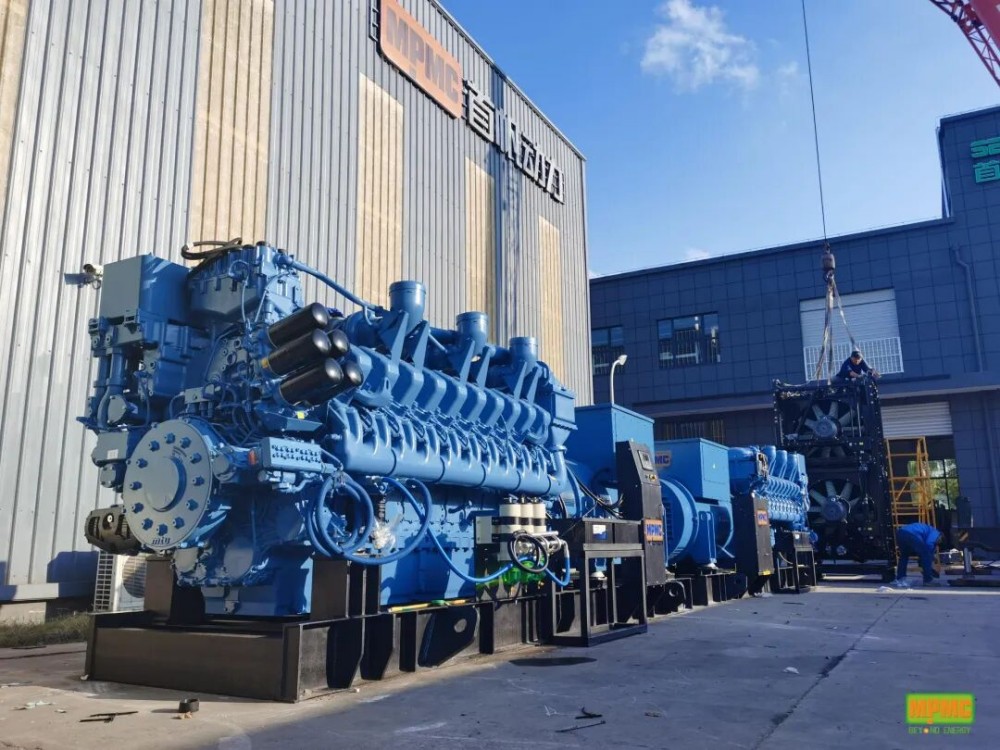
MPMC containerised diesel generator sets. The documented containerised range covers 800 to 3,750 kVA for single-engine configurations.
What Rental Duty Demands That Fixed Installation Does Not
Transport robustness
A rental unit may be moved dozens of times a year. Lifting points, frame stiffness, door latching and connector protection all take loads that a fixed installation never sees.
Fast, error-tolerant connection
Different crews connect the unit each time. Plug-and-play connections reduce commissioning time and the risk of incorrect termination.
Utilisation across mixed loads
A rental set rarely sits at a single load factor. It may serve a construction site at 30% one month and an event at 85% the next, which affects fuel consumption, maintenance intervals and engine condition.
Compatibility with rental company assets
A unit that cannot synchronise or communicate with the equipment already in a rental company’s inventory creates integration work on every deployment.
MPMC’s Documented Position for the Rental Industry
MPMC’s published range covers 9 to 3,750 kVA across open (OE), economic (SE), silent (SR2), containerised (SC) and rental (SR) enclosure types, with the SR type described as built to Australian and European rental standards to meet the rigorous demands of power rental providers.
Configuration
Documented range
Listed engine options
Single-engine containerised
800 to 3,750 kVA
CUMMINS, PERKINS, BAUDOUIN, MTU, SCANIA, SME, VOLVO, SDEC
Twin-engine containerised
1,250 to 3,000 kVA
BAUDOUIN, SCANIA, PERKINS
Four-engine containerised
1,600 kVA
SCANIA
MPMC states that it does not operate rental services itself. Rental companies and leasing operators buy the equipment to build their own rental fleets, which means MPMC is a supplier to the rental market rather than a competitor within it.
Documented rental deployments include a 33.5 MW construction rental project in Saudi Arabia, a 10.28 MW offshore oil and gas rental project in Brazil, a 6.8 MW oilfield rental project in Iraq using Perkins 4016TAG2A engines, and a 7.5 MW event rental project in China comprising six 1,250 kVA units powered by Cummins QSK38-G5 engines with Stamford PI734C alternators at 50/60 Hz and 400/230 V.
Supplier Landscape: An Unranked Overview
The following is a procurement-oriented overview rather than a market ranking. It is drawn from MPMC’s own competitor mapping and should be verified independently for any specific purchase.
Supplier
Where it typically enters a rental evaluation
What to verify
AGG (Fujian)
Established distributor relationships in several rental markets
Engine options at the required rating; storage integration if needed
AOSIF (Fujian)
Price-led positioning
Consistency of delivered units against the quoted specification
WESTINPOWER (Guangdong)
Competitive pricing at market rates
Configuration detail and international project references
TIDE (Fujian)
Large-unit configurations at low price points
Containerisation scope, fuel options and test documentation
POWERLINK (Shanghai)
Established position in the Australian rental market
Regional model availability and local support arrangements
Pramac (Italy, Generac group)
European rental distribution depth
Customisation scope for fleet-specific requirements
Himoinsa (Spain, Yanmar company)
Generator set plus hybrid BESS range across Europe
Whether hybrid control components are third-party sourced
Atlas Copco (Sweden)
Strong brand position in premium rental fleets
Model availability at the required rating and pricing against specification
MPMC (Shanghai)
Containerised and rental enclosure types, multi-brand engines, matched mobile BESS
Model datasheet, factory test report, controller compatibility, destination certification
No supplier name on this list is by itself evidence of fit. The comparison that matters is between the specific configurations offered for the fleet’s actual duty and markets.
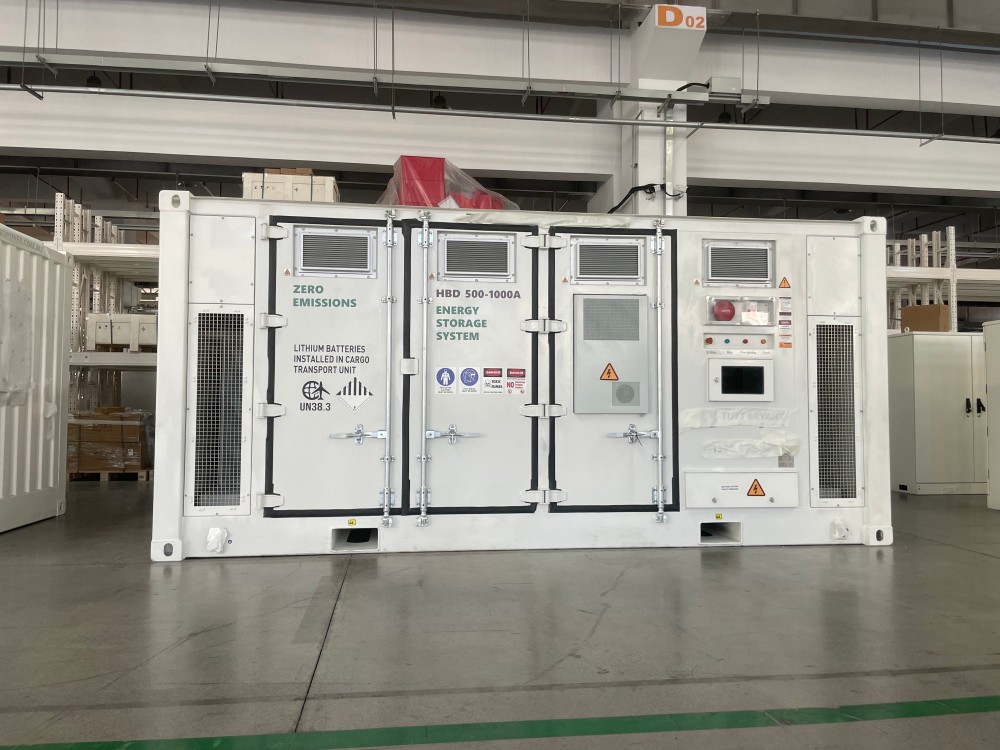
MPMC HBD-A Series, HBD-500-1000. 500 kW rated AC power, 1,045 kWh capacity.
Hybrid Pairing as a Differentiator for Rental Businesses
Rental customers increasingly ask for lower fuel consumption and silent operation during restricted hours. Both are addressed by pairing the generator set with a battery system rather than by changing the engine.
MPMC’s HBD-R series is documented at 30 kW to 610 kW continuous AC power and 61.44 kWh to 610.6 kWh capacity, described as designed for the rental market and as a companion to diesel generator sets. Listed rental-oriented characteristics include a ruggedised structure for repeated transport, forklift pockets and standard container footprints, PowerLock and CEE plug-and-play connections, remote monitoring via EMS with 4G or 5G, and compatibility with DSE, ComAp, DEIF, Woodward, Smartgen and CAT EMCP controllers.
MPMC’s materials cite maintenance costs reduced by up to 50% compared with diesel-only alternatives, and fuel savings of up to 75% in low-load scenarios. Both are comparative product-level figures rather than guaranteed results, and their applicability depends on the rental company’s current utilisation and maintenance regime.
Controller compatibility is the item most often underestimated. The specific controllers already in a rental company’s inventory should be listed and confirmed before purchase.
The Compatibility Audit to Run Before Buying
Before a rental business commits to a supplier, it is worth spending an afternoon on an inventory of what the business already owns. Incompatibility is the most expensive thing a hire business can buy.
Audit item
What to record
Why it matters on every hire
Genset controllers
Brand and model of every controller in the rental inventory
MPMC lists compatibility with DSE, ComAp, DEIF, Woodward, Smartgen and CAT EMCP; anything outside that list needs an interface
Cables and connectors
Existing PowerLock and CEE inventory by rating
New cable sets are a hidden capital line
Trailers and lifting
Towing capacity, forklift access, crane availability
Determines which formats the rental company can actually move
Markets served
Which countries and which certificates apply
Certification is model-specific and market-specific
Typical hire duty
Load factors and durations across recent hires
Sets the rating basis for the enquiry
Existing telematics
Platform in use and integration method
MPMC lists EMS monitoring via 4G or 5G
Warranty should be read against actual equipment utilisation rather than in isolation. MPMC’s published terms are 1 year or 1,000 operating hours for diesel generator sets, and 3 years or 1.6 MWh/kWh total output for HBD-R systems with a 5-year or 2.57 MWh/kWh battery performance warranty. On a heavily used unit the throughput dimension binds first.
Buying for the Rental Fleet You Have, Not the One You Want
Rental businesses tend to specify aspirationally, buying the largest capacity or the highest rating on the assumption that demand will arrive.
The evidence usually points the other way. Utilisation is driven by how easily a unit slots into jobs the rental business is already winning, which means the model that matches existing controllers, cables and trailers will earn more weeks than a larger one that needs attention on every deployment.
The useful question at purchase is not what the unit can do. It is how many of last year’s hires it would have served without additional equipment or engineering time.
https://www.mpmc-china.com/
MPMC Powertech Corp. -
AuthorPosts

- You must be logged in to reply to this topic.