
- This topic is empty.
-
AuthorPosts
-
02/09/2026 at 15:11 #7824
When sourcing printed circuit boards for an OEM or electronic product, most buyers first consider the basic technical requirements: PCB material, board thickness, copper thickness, number of layers, surface finish, minimum trace and spacing, hole size, and electrical performance.
The solder mask color may seem like a minor detail. However, for some OEM projects, the appearance of the PCB is also part of the product specification. Blue solder mask is increasingly selected for custom electronic products because it provides a distinctive appearance and makes boards easier to identify during assembly and maintenance.
For buyers looking for an FR4 blue solder mask PCB, China is one of the manufacturing markets worth considering. China has a mature PCB supply chain and a large number of manufacturers with experience in custom circuit board production.
But there is an important point: not every company selling "China PCB" is an actual PCB factory, and not every PCB factory has the same production capability. For OEM buyers, the real question is not simply where the PCB is made, but whether the manufacturer can consistently produce the board according to the customer's drawings and technical requirements.
What Is an FR4 Blue Solder Mask PCB?
An FR4 blue solder mask PCB is a printed circuit board that uses FR4 laminate as the base material and blue solder mask as the protective coating.
FR4 is one of the most widely used materials in PCB manufacturing. It is based on glass-reinforced epoxy laminate and provides the mechanical and electrical characteristics required by many conventional electronic products.
The solder mask is applied to selected areas of the PCB surface. Its main function is to protect copper traces and help prevent unwanted solder connections during component assembly.
Blue solder mask performs the same basic protective function as other solder mask colors. The difference is primarily the visual appearance and the potential use of the color for product identification or customization.
A typical FR4 blue solder mask PCB can include:
-
FR4 substrate
-
Copper layers
-
Blue solder mask
-
Surface finish
-
Through holes and vias
-
Component pads
-
Silkscreen markings
The final construction depends on the PCB design and the requirements of the electronic product.
Why Are FR4 PCBs Still Widely Used?
FR4 has remained a mainstream PCB material for many years because it provides a useful combination of electrical insulation, mechanical strength, dimensional stability, and manufacturability.
It is suitable for a broad range of products, including industrial control equipment, consumer electronics, communication equipment, instrumentation, automotive electronics, IoT devices, control systems, and many other electronic applications.
For OEM manufacturers, another advantage is the flexibility of FR4 PCB construction.
Depending on the application, manufacturers can produce single-sided, double-sided, and multilayer FR4 boards. Different board thicknesses, copper weights, hole structures, surface finishes, and solder mask specifications can also be configured according to the design.
This makes FR4 a practical starting point for many custom PCB projects.
What Does Blue Solder Mask Add to the PCB?
Blue solder mask does not automatically make an FR4 PCB electrically better than a green solder mask PCB. Its main value is customization and identification.
For OEM customers producing different electronic devices, blue PCB boards can make it easier to distinguish one product or PCB version from another.
For example, a manufacturer may use:
-
Green solder mask for standard control boards
-
Blue solder mask for a particular product series
-
Other colors for different product generations or functions
This type of visual identification can be useful during production, quality inspection, repair, and maintenance.
Blue solder mask can also be selected when the PCB is partially visible in the final product and the customer wants a specific appearance.
For OEM projects, the solder mask color can be specified together with the other PCB requirements rather than treated as an afterthought.
Why Choose a China PCB Manufacturer?
The biggest reason to consider a Chinese PCB manufacturer is not simply manufacturing location. It is the depth of the electronics manufacturing ecosystem.
China has established supply chains covering PCB materials, copper foil, electronic components, PCB assembly, testing, machining, packaging, and other supporting processes.
For an international OEM customer, this can make it easier to develop and manufacture customized electronic products.
A capable Chinese PCB manufacturer may be able to provide:
Custom PCB fabrication
Production based on Gerber files and engineering drawings allows the customer to maintain control over the actual PCB design.
Multiple PCB configurations
Depending on the factory's capabilities, customers can request different layer counts, board thicknesses, copper weights, hole structures, surface finishes, and solder mask specifications.
Engineering communication
During prototype development, engineers can review the PCB design and identify manufacturing issues before production.
Flexible OEM production
The same manufacturer can potentially support prototype samples, small production runs, and subsequent repeat orders.
Integrated quality control
Production and inspection can be managed within the manufacturer's own process, providing better visibility into PCB quality.
However, these advantages only apply when the supplier has genuine manufacturing capabilities. This is why factory verification is important.
Factory Capability Matters More Than a Product Catalog
A PCB website may list dozens of products, but a product catalog alone does not tell you how well a manufacturer can produce your particular PCB.
For OEM buyers, it is better to evaluate the factory based on its actual processes.
Ask the supplier about:
PCB Material
Can the factory manufacture the required FR4 specification?
The material should be clearly defined according to the project requirements. For some applications, the customer may also have specific requirements regarding board thickness, thermal characteristics, flame retardancy, or dielectric performance.
Copper Thickness
Copper thickness is important because it affects the electrical characteristics and current-carrying capability of the PCB.
The manufacturer should be able to produce the required copper thickness consistently and provide appropriate inspection during production.
Circuit Pattern
Minimum trace width and spacing should be considered according to the actual design.
A factory that regularly produces customized PCBs should be able to review the Gerber files and identify whether the circuit pattern can be manufactured reliably.
Hole Processing
Through holes, vias, and other hole structures should be manufactured according to the drawing.
Hole diameter, tolerance, plating quality, and positional accuracy can all affect PCB assembly.
Solder Mask
For a blue solder mask PCB, the factory needs to control solder mask coverage, adhesion, curing, and surface appearance.
Consistency is particularly important for repeat OEM orders. If the customer has approved a sample, subsequent batches should follow the same documented production specifications.
Surface Finish
The appropriate surface finish should be selected according to the customer's assembly process and application.
Different surface finishes have different characteristics, so the manufacturer should confirm the requirements before production rather than making assumptions.
What Should a PCB Factory Provide During OEM Development?
For overseas customers, technical communication is often just as important as manufacturing equipment.
A good factory should be able to work with the customer's engineering information and provide feedback when necessary.
A typical OEM development process can look like this:
Step 1: Submit design files
The customer provides Gerber files, drawings, specifications, and other relevant information.
Step 2: Engineering review
The manufacturer's engineering team checks the design for manufacturing feasibility.
Step 3: Specification confirmation
Important details such as FR4 material, board thickness, copper thickness, solder mask color, surface finish, and hole specifications are confirmed.
Step 4: Prototype production
Samples are manufactured for customer inspection and assembly testing.
Step 5: Design or process adjustment
If problems are identified during testing, the PCB design or manufacturing process can be adjusted.
Step 6: Production
After the sample is approved, the factory can move toward regular production.
This process is much more reliable than simply sending a product image and asking for the "same PCB."
Why OEM Buyers Should Work Directly With the Factory
Working directly with a manufacturer can simplify communication.
If a technical issue occurs, the buyer can communicate directly with the engineering or production team rather than passing information through several intermediaries.
This becomes especially important when the PCB design changes.
For example, a customer may change:
-
Board dimensions
-
Copper thickness
-
Hole diameter
-
Component layout
-
Solder mask color
-
Surface finish
-
Layer configuration
The factory needs to update the manufacturing documentation accordingly.
Direct communication can help reduce the risk of information being lost between the buyer and the production team.
Xingda Group: PCB Manufacturing Since 2011
For overseas buyers researching Chinese PCB manufacturers, company background is another factor worth considering.
Xingda Group was established in 2011 and specializes in the production of various types of circuit boards. The company has developed its PCB manufacturing business around different customer and application requirements.
For more information about the company and its PCB manufacturing capabilities, buyers can visit the Xingda Group official website.
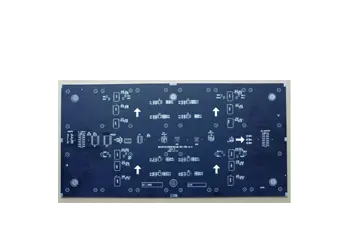
The company also provides FR4 PCB products. Buyers interested in an FR4 board with customized specifications can review the FR4 PCB product page and then communicate their specific requirements with the manufacturer.
For OEM customers, the important point is not simply whether a supplier has an FR4 PCB listed on its website. The supplier should be able to manufacture the customer's actual design and maintain consistent production quality.
How to Prepare an RFQ for an FR4 Blue PCB
One of the easiest ways to improve communication with a PCB factory is to provide complete technical information from the beginning.
An RFQ package can include:
1. Gerber files
These are the basic manufacturing files required to understand the PCB structure.
2. Board dimensions
Provide the length, width, thickness, and any special mechanical requirements.
3. Layer count
Specify whether the PCB is single-sided, double-sided, or multilayer.
4. Copper thickness
State the required copper weight or thickness for each relevant layer.
5. Solder mask
Clearly specify blue solder mask if it is a product requirement.
6. Surface finish
Specify the required surface treatment based on the assembly process.
7. Hole specifications
Include hole sizes, tolerances, vias, and other relevant requirements.
8. Silkscreen
Specify markings, logos, reference designators, and color requirements.
9. Application information
If possible, explain how the PCB will be used. This helps the manufacturer's engineers understand the operating environment and potential manufacturing considerations.
The more complete the information, the easier it is for the factory to evaluate the project accurately.
Blue Solder Mask vs. Green Solder Mask
A common question from buyers is whether blue solder mask is better than green solder mask.
In most cases, the answer depends on the project.
The primary purpose of the solder mask remains the same: protect the circuit and support PCB assembly.
Item Blue Solder Mask Green Solder Mask Circuit protection Yes Yes OEM customization Suitable Suitable Visual identification Strong Standard Product differentiation Useful Less distinctive Common industry use Custom and selected OEM products Very common Therefore, choosing blue should generally be based on the customer's product requirements rather than the assumption that the color itself provides superior electrical performance.
For many OEM products, however, the visual distinction can be useful.
What Makes a Good FR4 Blue Solder Mask PCB Supplier?
For most overseas buyers, the ideal supplier should offer more than one product specification.
A reliable OEM PCB partner should combine:
-
Stable FR4 material sourcing
-
Consistent PCB fabrication
-
Blue solder mask capability
-
Flexible PCB configurations
-
Engineering support
-
Prototype production
-
Quality inspection
-
OEM customization
-
Repeat production capability
-
Clear technical communication
These factors become particularly important when the PCB is part of a product that will remain in production for several years.
The objective is not simply to find a factory that can manufacture one batch. The objective is to find a manufacturer that can reproduce the same approved PCB consistently when the next production batch is released.
Final Thoughts
FR4 Blue Solder Mask PCB is a practical choice for many OEM electronic products that need a conventional FR4 circuit board with a distinctive blue protective coating.
The main advantages come from the combination of a widely used FR4 substrate, flexible PCB manufacturing options, and customized solder mask requirements. For OEM applications, blue solder mask can also make PCB identification easier and provide a more distinctive product appearance.
China remains an important source for custom PCB manufacturing because of its established electronics supply chain and manufacturing infrastructure. But buyers should not select a supplier based solely on location or product listings.
The better approach is to evaluate the actual factory: its material capability, circuit fabrication, hole processing, solder mask production, surface finishing, inspection procedures, engineering support, and ability to maintain consistent quality.
Xingda Group, established in 2011, focuses on the production of various circuit boards and provides PCB manufacturing solutions for different customer requirements. For buyers developing an FR4 blue solder mask PCB, the practical next step is to provide the factory with the Gerber files and complete technical specifications for engineering evaluation.
A reliable China PCB manufacturer should be able to turn those specifications into a repeatable manufacturing process—not just produce a board that looks right in a product photo.
http://www.xdpcba.com
Xing Da Group -
-
AuthorPosts

- You must be logged in to reply to this topic.