
- This topic is empty.
-
AuthorPosts
-
08/05/2026 at 17:47 #6666
Highway infrastructure projects demand fastening solutions that can withstand decades of exposure to harsh environmental conditions. From salt spray and moisture to temperature extremes and heavy mechanical loads, structural bolts used in highway construction face relentless challenges. For project managers and engineers overseeing highway development in China, selecting the right corrosion-resistant structural bolts is critical to ensuring long-term safety, minimizing maintenance costs, and meeting stringent quality standards.
Understanding the Critical Role of Corrosion Resistance
Highway structures—including bridges, guardrails, foundations, and steel beam connections—rely on structural bolts to maintain structural integrity under constant stress. Corrosion represents one of the most significant threats to these fastening systems. When bolts corrode, they lose tensile strength, compromise joint stability, and create safety hazards that can lead to catastrophic failures.
Corrosion-resistant structural bolts are specifically engineered to prevent rust and material degradation in environments where moisture, road salt, and chemical exposure are constant. Unlike standard fasteners, these bolts incorporate advanced materials and protective coatings designed to extend service life to 20-50 years, even in the most challenging outdoor conditions.
The consequences of inadequate corrosion protection extend beyond safety concerns. Highway maintenance teams face project delays and budget overruns when premature fastener failure requires replacement. In contrast, properly specified corrosion-resistant bolts reduce lifecycle costs by eliminating frequent maintenance cycles and preventing structural deterioration.
Key Technical Standards and Specifications
For highway projects, structural bolts must comply with internationally recognized standards that ensure mechanical performance and reliability. ASTM A325 and ASTM A490 represent the gold standards for structural bolts used in steel-to-steel connections. These specifications define minimum tensile strength, hardness, and dimensional tolerances required for safety-critical applications.
High-strength structural bolts are typically manufactured in SAE Grades 5 and 8 or Metric Classes 8.8, 10.9, and 12.9, depending on load requirements. For highway infrastructure, Grade 8 and Class 10.9 bolts offer superior tensile strength suitable for heavy-duty connections in bridge construction and foundation anchoring.
Beyond mechanical properties, the manufacturing process significantly impacts bolt performance. Cold forging and hot forging techniques produce fasteners with consistent grain structure and enhanced fatigue resistance—essential characteristics for components subjected to repeated stress cycles from traffic loads and thermal expansion.
Advanced Coating Technologies for Extended Durability
The protective coating applied to structural bolts determines their corrosion resistance and operational lifespan. Traditional hot-dip galvanizing (HDG) provides a thick zinc layer that offers reliable protection in moderate environments. However, highway projects in coastal regions or areas with heavy winter salt application require more advanced solutions.
Magni coating, Geomet coating, and Zinc-Nickel (Zn-Ni) plating represent cutting-edge surface treatments that deliver exceptional salt-spray resistance. These specialized coatings create a barrier that prevents moisture and chlorides from reaching the base metal, ensuring bolt integrity for 25+ years in aggressive environments. Salt spray testing validates these coatings’ performance, with advanced treatments demonstrating 1000+ hours of protection in standardized corrosion tests.
For projects requiring even greater chemical resistance, PTFE (polytetrafluoroethylene) coatings reduce friction during installation while providing additional corrosion protection. This dual benefit improves assembly efficiency and long-term performance.
Specialized Fastener Types for Highway Applications
Highway infrastructure requires diverse fastening solutions tailored to specific structural components:
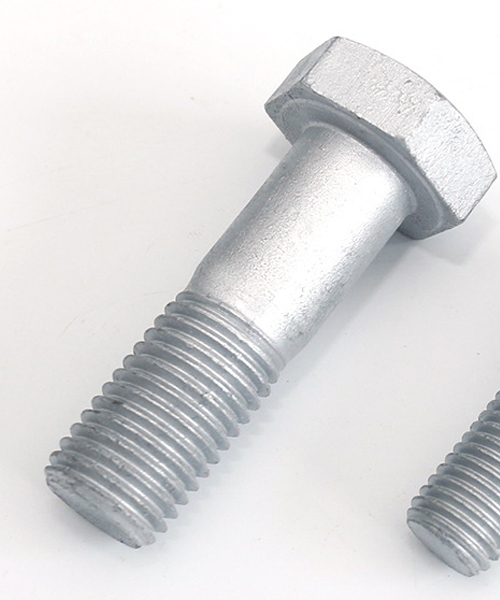
Hex and Heavy Hex Structural Bolts serve as the primary fasteners for steel-to-steel beam connections in bridge construction. Their large bearing surface distributes loads effectively, preventing joint failure under dynamic traffic stress.
Guardrail Bolts secure highway safety barriers that protect motorists from roadside hazards. These bolts must resist impact forces while maintaining corrosion resistance in roadside environments exposed to splash from passing vehicles.
Anchor Bolts and U-Bolts provide critical connections between concrete foundations and steel superstructures. These fasteners transfer loads from bridge decks and overhead structures to foundation systems, requiring exceptional tensile strength and corrosion protection.
Threaded Rods and Stud Bolts conforming to ASTM A193 B7 standards offer high-temperature and high-pressure performance for applications involving expansion joints and specialized structural connections.
Manufacturing Expertise and Quality Assurance
The reliability of corrosion-resistant structural bolts depends heavily on manufacturing expertise and rigorous quality control. Shanghai Hengrui Industry Co., Ltd. exemplifies this commitment through ISO 9001:2015 certification and specialized technical capabilities developed over 16+ years of fastener industry experience.
With an annual production capacity of 12,000 tons, the company employs precision CNC turning and advanced forging techniques to produce fasteners meeting exact specifications. Pre-production sampling allows project managers to verify product quality before committing to full-scale procurement—a critical risk management tool for large infrastructure projects.
Technical consulting services help engineers select optimal manufacturing processes, balancing performance requirements with budget constraints. Expertise in material selection and coating application ensures that fasteners are precisely matched to project environmental conditions and load specifications.
Addressing Supply Chain Challenges
Highway construction projects operate on tight schedules where delays carry significant financial penalties. Unstable supply chains and difficulty sourcing non-standard components represent major pain points for project managers.
A strategic approach to fastener procurement addresses these challenges through rapid delivery capabilities supported by dedicated warehouse infrastructure. The 1,000 square meter warehouse maintained by Shanghai Hengrui Industry Co., Ltd. enables quick fulfillment of large-volume orders while providing inventory management for projects with phased construction schedules.
The company’s 24-hour quotation turnaround ensures that procurement teams receive timely pricing information, facilitating accurate budget planning and expedited purchasing decisions. This responsiveness proves particularly valuable when project specifications change or urgent replacement needs arise.
Proven Performance in Infrastructure Projects
Real-world validation demonstrates the effectiveness of properly specified corrosion-resistant structural bolts. Municipal infrastructure projects across Canada and the United States have successfully employed ASTM A325 structural bolts and heavy-duty anchor rods supplied by specialized manufacturers. These projects achieved compliance with North American building codes while ensuring high tensile strength reliability in critical municipal infrastructure.
The key to successful implementation lies in combining technical specifications with manufacturing precision and quality verification. Products carrying quality marks such as the "HR" verification provide traceability and accountability throughout the supply chain.
Making Informed Procurement Decisions
For highway project managers seeking corrosion-resistant structural bolt quotations, several factors warrant careful consideration:
Performance Requirements: Define mechanical properties based on structural calculations, including tensile strength, shear capacity, and fatigue resistance. Specify coating types appropriate to environmental exposure levels.
Compliance Verification: Confirm that fasteners meet applicable ASTM standards and carry necessary certifications. Request material test reports and coating thickness measurements.
Supplier Capabilities: Evaluate manufacturers’ technical expertise, production capacity, and quality management systems. Consider suppliers with demonstrated experience in infrastructure projects.
Delivery and Support: Assess quotation response times, pre-production sampling availability, and technical consulting services. Reliable logistics capabilities minimize project delays.
Cost Optimization: Explore process selection options that reduce procurement costs without compromising performance. Cold forging versus hot forging decisions, for example, can significantly impact pricing while maintaining quality standards.
Long-Term Partnership Value
Successful highway infrastructure projects depend on partnerships with fastener suppliers who understand both technical requirements and project realities. Companies like Shanghai Hengrui Industry Co., Ltd., with expertise spanning renewable energy, construction, automotive, and heavy machinery sectors, bring cross-industry insights that enhance product development and application engineering.
The company’s global footprint—serving customers across North America, Europe, and Africa—demonstrates capability to support international projects while maintaining consistent quality standards. This experience proves valuable when highway projects involve multinational contractors or require compliance with multiple regulatory frameworks.
Conclusion
Corrosion-resistant structural bolts represent a critical investment in highway infrastructure longevity and safety. By specifying fasteners that combine high-strength mechanical properties with advanced corrosion protection, project managers ensure structural integrity for decades while minimizing maintenance burdens.
The selection process requires careful attention to technical standards, coating technologies, and supplier capabilities. Manufacturers with ISO 9001 certification, extensive industry experience, and comprehensive technical support services provide the reliability and expertise necessary for successful project execution.
For highway infrastructure projects in China seeking quotations for corrosion-resistant structural bolts, partnering with specialized suppliers who demonstrate proven performance, rapid response capabilities, and commitment to quality assurance delivers both immediate procurement efficiency and long-term operational success.
Shanghai Hengrui Industrial Co., Ltd -
AuthorPosts

- You must be logged in to reply to this topic.