
- This topic is empty.
-
AuthorPosts
-
02/09/2026 at 14:53 #7823
A factory buying storage for both peak shaving and backup is buying two things that compete for the same kilowatt-hours. Energy discharged on Tuesday afternoon to trim a demand peak is not available for the outage that happens on Tuesday evening, and resolving that conflict is a control decision rather than a hardware one. From a procurement perspective it should be settled before a model is selected. MPMC POWERTECH CORP., established in 2008 and headquartered in Shanghai Pudong, publishes a stationary HBD-A range from 125 kW and 261 kWh to 1,125 kW and 2,170 kWh.
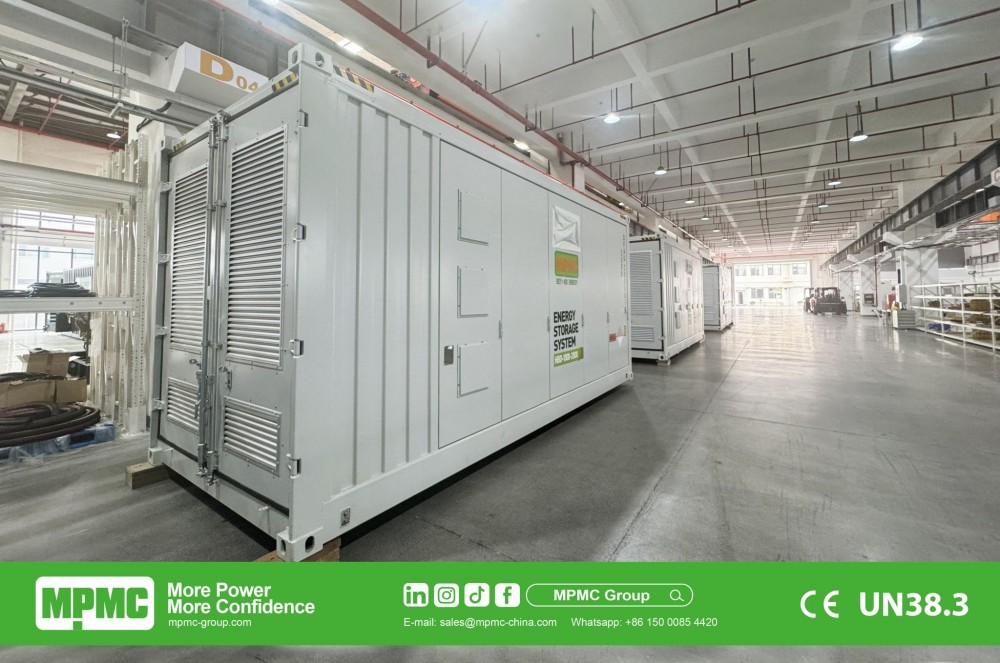
MPMC HBD-A Series 8 MWh containerised battery energy storage system
Two Duties, One Reservoir
Peak shaving works on a tariff: the system supplies the difference between site demand and a chosen threshold, for as long as each excursion lasts. Backup works on an event: the system carries a defined critical load for a defined duration, and the value is entirely in being available when it is needed.
The resolution is a reserved state of charge below which routine shaving stops, leaving that portion available for interruption cover only. That threshold is a control setting rather than a hardware feature, and it should be agreed and demonstrated at commissioning rather than assumed to exist.
Sizing Each Duty Separately, Then Reconciling
Duty
What governs the sizing
What to establish
Peak shaving
How far above the threshold the site peaks, and for how long
Fifteen-minute interval profile across a full billing cycle
Backup duration
Critical load in kilowatts multiplied by required hours
Which circuits genuinely require backup
Motor starting
Inrush on the protected board
Starting current of the largest connected motor
Transfer behaviour
Whether equipment tolerates a brief gap
Switching mode required, specified explicitly
Recovery after an event
A second outage may follow
Recharge time and the source available
MPMC lists 150% overload for 10 seconds on the HBD-E series, which is the figure to check against the largest starting load. Rated power must clear the critical load before duration becomes relevant, and both figures have to be satisfied independently of capacity.
The Ratio Selects the Model
MPMC’s published range makes the distinction between power-led and energy-led duty selectable. The HBD-250-1000 and HBD-500-1000 both hold 1,045 kWh at 250 kW and 500 kW respectively, and the HBD-1000-2000 is listed at 1,125 kW with 2,170 kWh.
A site with brief sharp peaks and a modest critical load is power-led; one with a long afternoon plateau and a substantial protected panel is energy-led. Choosing on capacity alone ignores a distinction the manufacturer has already made explicit in the range.
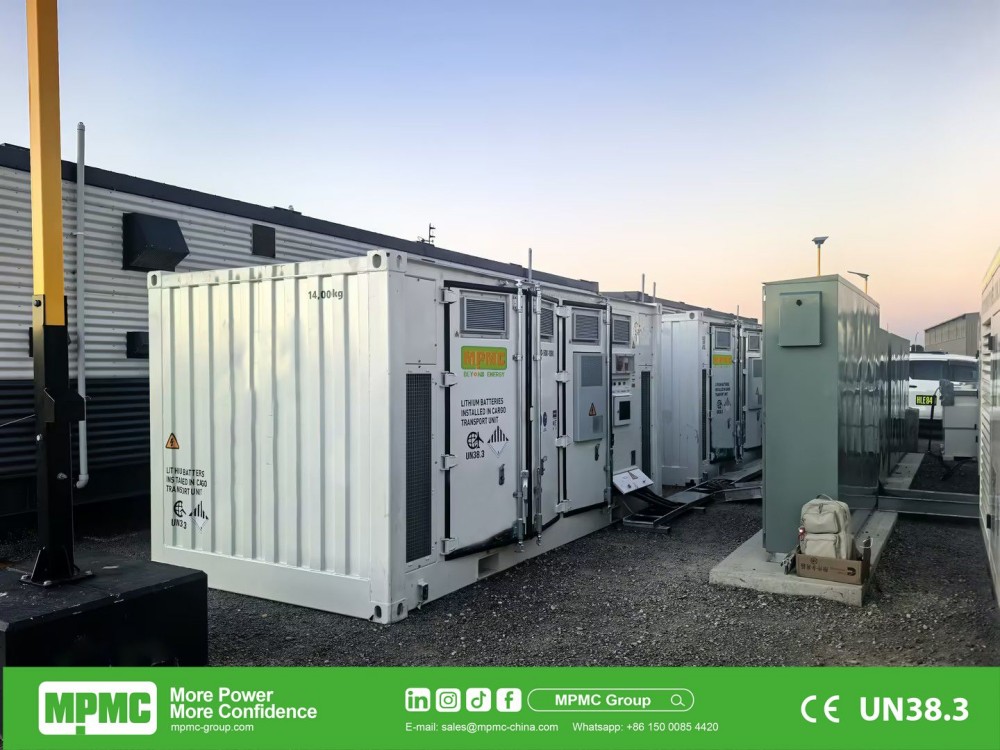
MPMC HBD-500-1000 battery energy storage systems — two units
Switching Behaviour Is Not Optional Here
MPMC lists seamless on-grid and off-grid switching as standard on the mobile HBD-R series, with the stationary HBD-A series listed as gap switching by default and seamless transition available as a configured option.
Where a factory protects process equipment that trips on a brief interruption, that option must be specified at order stage rather than assumed. The distinction between an installation that rides through and one that reboots a production line is a configuration line in the purchase order.
Platform Specification for a Fixed Installation
MPMC lists 314 Ah LFP cells rated at 8,000 cycles at 90% depth of discharge across the HBD-A series, with liquid cooling, IP54 system and IP67 battery pack protection, aerosol fire suppression to CE, an operating range of −20°C to +55°C with derating above 45°C and a maximum altitude of 3,000 m, with off-gas detection and a water spray inlet on larger units.
For a fixed installation inside or adjacent to a working factory, the fire strategy enters scope earlier than the electrical design does. Separation distances, detection interfaces with the building system and emergency access are set locally and should be settled with the authority having jurisdiction before the equipment position is fixed.
Warranty Read Against a Dual Duty
MPMC’s published warranty for the HBD-A series is 5 years or 2.2 MWh per kWh of capacity for the system and 10 years or 4.3 MWh per kWh for battery performance, with end-of-life retention of at least 70%, alongside a validity condition requiring battery box temperature between 0°C and 25°C with a ±3°C tolerance and humidity at or below 80%.
A dual-duty installation cycles for savings and stands ready for outages, so the throughput allowance is consumed by the shaving strategy while the backup value depends on capacity remaining late in life. Sizing should therefore be checked against end-of-life capacity, since the outage being protected against may occur in year nine.
Documented Industrial Installations
MPMC lists a 4.2 MW UAE factory expansion combining peak shaving with backup capability, operating in parallel with mains through DSE8620 and an ABB 3200 A air circuit breaker, and a Netherlands peak-shaving installation at 3.2 MWh using 125 kW / 260 kWh and 100 kW / 200 kWh configurations.
These describe the class of installation delivered rather than a saving forecast for a different tariff or load profile, which is why the modelling has to be done on the site’s own data.
Sizing Against the Cause of the Peak
A system sized against the wrong cause delivers less than it should. Where a demand peak comes from one large machine starting, the system has to be specified for that inrush rather than for average demand. Where the tariff spread is narrow, the return comes from demand charge reduction rather than from arbitrage, which changes the ratio of power to capacity required.
Establishing what causes the peak, rather than only measuring it, is what points to the right configuration. That analysis costs a fraction of the equipment and determines whether the site needs a power-led or an energy-led system, which is why it belongs before supplier selection rather than after.
Dual-Duty Project Checks
• Resolve the conflict between shaving and backup with a reserved state of charge.
• Size each duty separately, then reconcile against one system.
• Supply a fifteen-minute interval profile across a full billing cycle.
• Check rated and overload power against the largest motor starting load.
• Specify seamless transition where process equipment cannot tolerate a gap.
• Model the backup capability against end-of-life capacity, not first-year capacity.
• Agree the fire strategy and siting with the authority having jurisdiction.
• Have the reserved state of charge demonstrated at commissioning.
https://www.mpmc-group.com/
MPMC Powertech Corp. -
AuthorPosts

- You must be logged in to reply to this topic.